Historical Continuity
1760s — France and the French Antilles.
Systems of Craft and higher degrees were active within French Masonic circles and extended into the Caribbean through colonial networks.
1774 — The Caribbean.
Bodies exercising authority over the higher degrees were functioning through councils and inspectors responsible for continuity and transmission.
1780s — Saint-Domingue and Jamaica.
Saint-Domingue emerged as a central point of activity, with Jamaica operating in parallel, sustaining the Rite across the islands.
1796 — Saint-Domingue.
The organization of the higher degrees reached formal maturity, administered through established councils and tribunals.
1801 — Saint-Domingue.
Despite political upheaval, Masonic activity continued and authority traveled with those entrusted to preserve it.
1806 — Baracoa, Cuba.
Authority was carried from Saint-Domingue to Cuba, where the Rite was preserved intact during displacement.
1807 — New York.
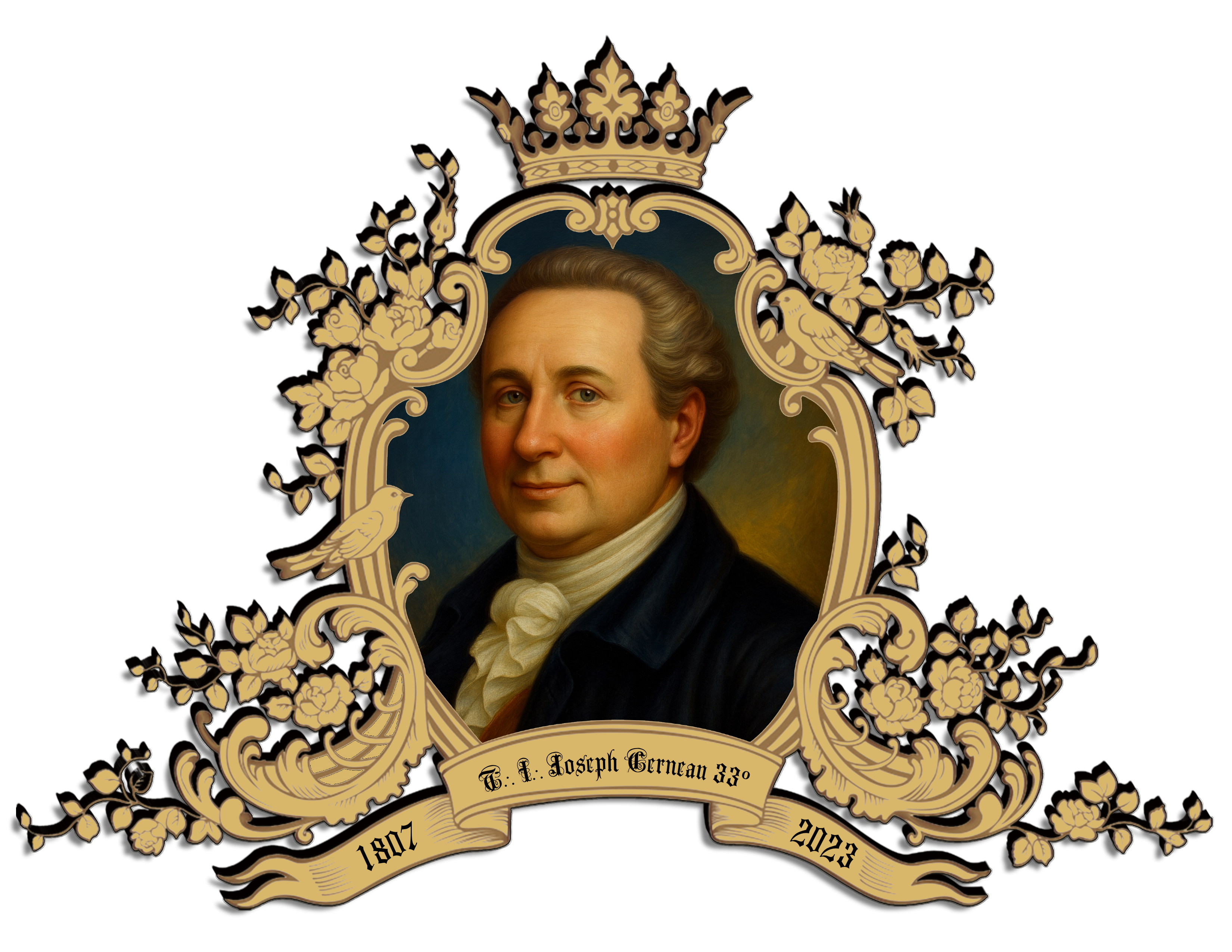
From Cuba, the Rite crossed into the United States. In New York, Joseph Cerneau organized and established the Rite on American soil.
1813 — Paris.
In France, the existing structures of the Rite were formally reaffirmed within the broader continuity of the system.
From these events emerged a complete and independent system, uniting symbolic Craft Masonry and the full progression of higher degrees, preserved through successive custodians and returned to the United States in faithful continuity with its earliest foundations.